
There are buildings that carry within them something irrepressible, a presence, a silent determination to exist despite the years, despite neglect, despite the elements. The orangery at Château d’Hodebert is one of them. Built in the elegant 18th-century style, nestled against the hillside as if nature itself had supported it, it nevertheless seemed doomed when we first laid eyes on it. Bringing such a place back to life cannot be improvised: it requires time, perseverance, a profound respect for heritage, and perhaps above all, the conviction that some things deserve to be saved. It is this conviction that has guided each of our decisions, each choice of materials, each restoration step. The orangery is now one of the places at Hodebert that is dearest to our hearts.
A two-century-old story
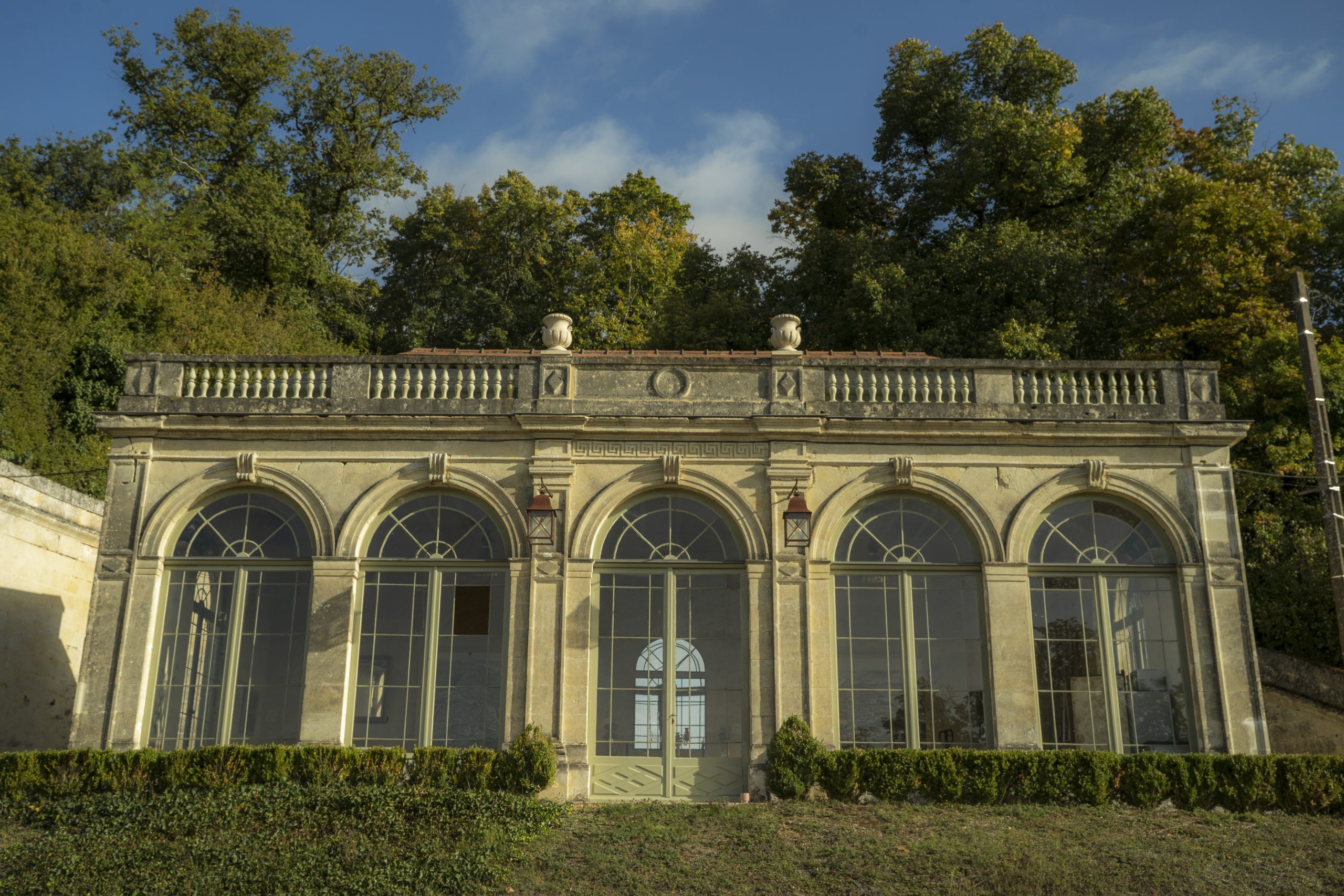
The castle's orangery has existed since the beginning of the 19th century. In its early years, it occupied the current living room of the Montmorency suite, facing due south — an ideal location for citrus trees, but quickly deemed too small.
This is our ancestor Marie-Caroline de Sarcé who, in 1860, decided to build a new orangery. In the pure style of the 18th century, it was built on the site of the 17th century outbuildings, constructed with the care and elegance that characterized the architecture of that era.
A last-minute rescue
When we arrived in 2004, the orangery was a mere shadow of its former self. The timber frame and roof had collapsed inside. The six arched windows and the large entrance door were in a state of advanced disrepair. More than 200 panes of glass were broken. For over fifty years, without any maintenance, the building had been left to decay, to the point that its demolition had been seriously considered.
We chose to save him.
A restoration carried out step by step
The restoration was long and meticulous, carried out over the years and as opportunities arose.
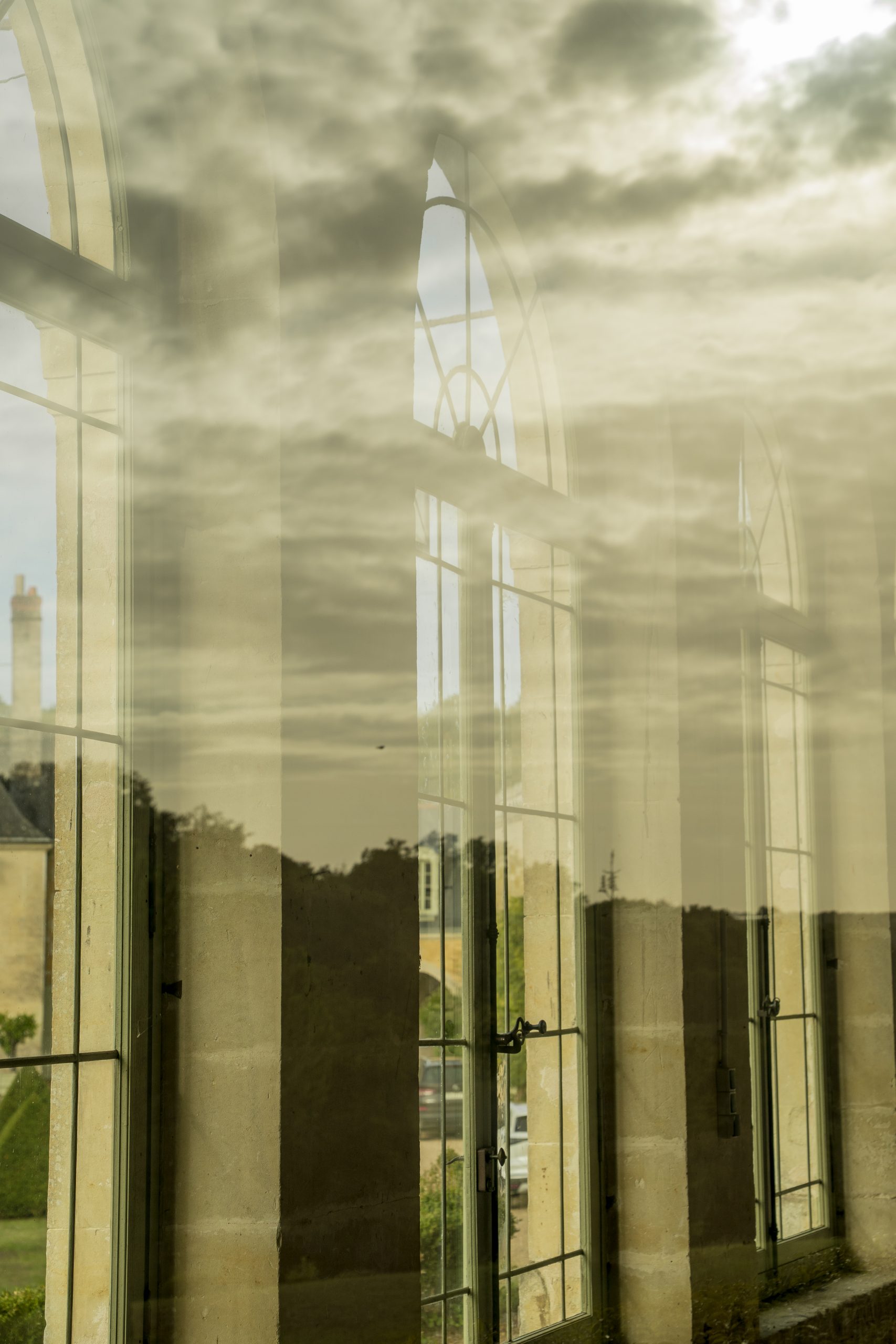
It all began with replacing the tiles, one by one. Then came the turn of the beautiful stone balustrade on the roof, which was carefully restored. The framework and roof were then completely rebuilt identically, using slate. A floor of antique terracotta tiles was then laid, bringing warmth and authenticity to the space.
The lockdown period in 2020 provided an opportunity to tackle the six arched windows that had stopped opening, as well as the large access door. After eighty years of disuse as an orangery, the building finally returned to its original purpose. Today, the orangery houses around twenty orange tree planters and four large Anduze vases each winter. It has regained its historical role with renewed grace.
A vibrant place, between nature and art
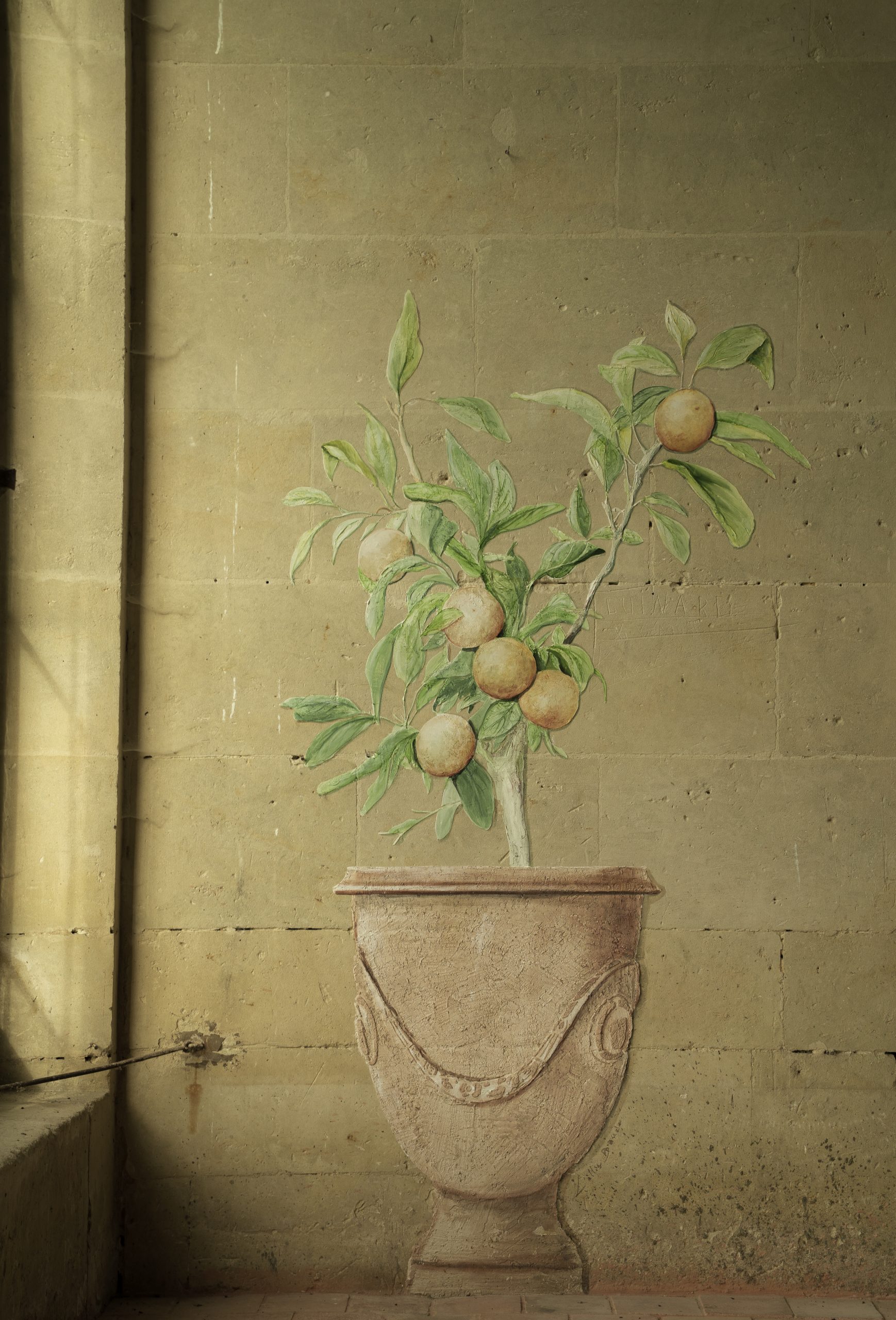
The orangery caught the eye of an exceptional artist: Lillia Baudo, one of the few master fresco painters still working in France. Listed by the Ateliers d’Art de France, she has worked in such prestigious locations as the Saujon thermal baths, an art center in China, and the Jules Verne restaurant on the second floor of the Eiffel Tower before participating in the restoration of Notre-Dame de Paris.
It was in the orangery of Château Hodébert that she chose to create a fresco depicting an Anduze vase and its orange tree—a subject perfectly suited to this location. The technique she employs, theaffresco, du latin in frescoThe "in the wet" technique involves painting pigments directly onto the still-damp lime plaster, allowing the colors to penetrate deeply into the material. Two chemical reactions, carbonation and crystallization, then occur, providing lasting protection for both the plaster and the paint layer. The application must be precise, swift, and unforgiving: every mistake is irreversible. It is precisely this demanding technique that gives alfresco frescoes their distinctive luminosity and their ability to endure through the centuries.
The originality of an architectural setting
What makes the orangery at Château d'Hodebert truly unique is also this high arched wall which protects and embraces it, following the natural hillside. More than a simple wall, it is the link between architecture and landscape, between human work and the surrounding nature.v

Ivana de la Bouillerie
Owner of Château d’Hodebert in the Loire Valley since 2004. Restoration, heritage and good deals in Touraine.